Portrait of Asli Gulcur in a dark blazer against a light background

Agentic AIStrategic initiatives & go-to-market

Asli
Gulcur

Executive · Operator · Advisor

I build new capabilities where strategy, technology, and organizational change meet.

I began my career at the height of the internet revolution and returned to Carnegie Mellon at the heart of the AI revolution. Across the internet, digital, and AI waves, my work has followed the same pattern: make change understandable, make it concrete, and equip organizations to act.

New York · London

Carnegie Mellon University2025–2026

Returned to the workbench for applied AI.

After more than a decade of enterprise leadership, I joined the inaugural MS in AI Systems Management cohort to work directly with agents, retrieval, evaluation, monitoring, and responsible-AI patterns.

Carnegie Mellon · Official profile From Stanford MBA to AI Systems Management 3:23
  • Applied AI projects
    One of three winners, CMU Databricks × UN OCHA hackathon (solo entry)
  • MS in AI Systems Management
    Highest Distinction
  • BS in Computer Science & Mathematics
    A return to an earlier technical foundation
Explore the AI work ↓

Carnegie Mellon University · Applied AI

The executive’s questions, tested hands-on.

At Carnegie Mellon, I moved from leading enterprise transformation to doing the work hands-on: agentic AI, RAG, evaluation, and real-time monitoring projects, each solo, with AI coding assistance. Each one starts from a question an executive would ask.

01

Multi-agent procurement simulation

April 2026
47%over the spending limit, still blocked by the code
The enterprise question

How can agents negotiate and act autonomously while keeping budget authority and consequential decisions reviewable by people?

What I designed and tested

A multi-agent procurement simulator with four safeguards: isolated vendor channels, an AI auditor, human approval, and a spending limit enforced in code, with every step logged. In a recorded run, a buyer agent awarded a contract 47% over the limit; the AI auditor flagged it, the human approved it anyway, and the limit in code still blocked it.

Open the repository →
02

Citation-grounded research portal

February 2026
171/171citations traced to a real paper and a retrieved passage
The enterprise question

What does it take to make generative-AI research outputs traceable enough for a skeptical user to trust?

What I designed and tested

A portal over a 30-paper corpus with a 25-query evaluation suite and a validator that strips citations to sources outside the corpus. In the three final evaluation runs, all 171 citations pointed to a real paper and a retrieved passage.

Open the repository →
03

Operationalizing a model on a live feed

November 2025
Live feedBTC-USD streaming data through Kafka, reconnecting after drops
The enterprise question

What does it take to keep a model running on a live data feed that can drop, and to pull it quickly when it misbehaves?

What I designed and tested

Live Coinbase BTC-USD ingestion through Kafka that survives feed drops, a model API that can roll back to a rule-based baseline through a single setting, and Prometheus and Grafana monitoring of latency and errors.

Open the repository →

Point of view ·

Five principles for agentic AI in the enterprise.

Digital transformation digitized deterministic workflows, where errors were bugs. Agentic AI means governing probabilistic systems: the code can run perfectly and the system can still drift. These principles come from two decades on the business side and a year of hands-on work at Carnegie Mellon.

01Start with the problem and the business case.

Excitement about new technology, and AI more than most, pulls the conversation toward the product: how fast we can sell it, how fast we can roll it out. I have seen this in tech and in industrial companies, and I bring the conversation back to the business problem we are solving. That means measuring the baseline metrics tied to that problem and building a business case leaders can decide on before anything goes live. Measurement is often overlooked, but after launch, those same metrics prove the improvement and earn the next investment.

I learned this taking proposals to investment committees at Koç Holding, a Fortune Global 500 group, and applied it at Salesforce, co-leading the business-value framework for a new AI category and building the business cases for multi-million-dollar SaaS deals with enterprise customers.

02Put the controls in code, and keep people accountable.

Every tool, data source and connection an agent gets widens its attack surface. Instructions hidden in an email, a web page or a document can hijack an agent’s goal (indirect prompt injection), and the risk is highest when that agent can also reach private data and send information out. Even without an attacker, agents can go beyond what they were asked to do to reach their goals: in 2026, AI agents under test broke out of their sandboxes and reached real companies’ systems. Each agent should get only the access its task needs, and hard limits, such as spending caps and required approvals, belong in code, not only in instructions a hijacked or overreaching model may not follow.

Refineries have worked this way for decades. If pressure or temperature crosses a safe limit, an independent safety system shuts the unit down automatically, without waiting for someone to decide. Agents need the same kind of hard stop.

In my multi-agent procurement simulation, vendor channels were isolated, no contract could execute without a person’s typed approval, and the spending limit was enforced in code. In one recorded run, a buyer agent awarded a contract 47% over the limit. The AI auditor flagged it, the human approved it anyway, and the code still blocked it. Layered controls catch what any single layer misses, while a named person stays accountable for every decision.

03Pair executive sponsorship with enablement that drives adoption.

I have seen CEO-level sponsorship drive two massive transformations: digital at Koç, where it was a boardroom expectation, and AI at Salesforce, where it was existential. That attention moves a giant organization out of its comfort zone and keeps the effort serious, but adoption is still uneven. At Salesforce, innovation moved faster than most of the organization could follow, and AI is harder to grasp than deterministic software.

Working with the CEO of Salesforce AI, I stepped in as a translator, synthesizing information from teams across the company into a business-value framework. When Salesforce pivoted quickly from Copilot to Agentforce, that framework was ready at launch. From the top of the organization to 5,000+ field personnel, people turned to it to get their heads around the new category and talk to customers in plain business terms about the questions to ask, what agents can do, and the business impact.

04Earn trust before you ask for adoption.

This is a chaotic time. Agents are often bolted onto old workflows, some companies have already cut jobs in AI’s name, and no one yet knows what the organization looks like once agents are adopted. People are being asked to embrace tools that may change their jobs, and many are afraid.

Trust comes from being honest about what we know and what we don’t, involving the people who do the work in redesigning it, and giving someone clear ownership of workflows that cut across teams. Start with use cases that make daily work better and help people meet the goals they are measured on, so they feel the benefit themselves. Then make it a habit: experiment within clear guidelines and share what works.

Trust also depends on what happens to the people whose jobs change the most. In an agent-based simulation I built at Carnegie Mellon, 30 workers faced rising automation. Under aggressive automation with little support, 9 ended up unemployed; with human-centric support, only 1 did. Training capacity alone did not explain the gap. More time to adapt, faster retraining and peers further along in recovery made the difference. The longer someone stayed out of work, the harder it became to get back.

05Treat going live as the beginning.

An agent that works on launch day may not work the same way a month later. After launch, the requests it handles change as new products, customers and questions appear, the business moves on as prices, policies and regulations change, and the models underneath are updated, retired or routed differently to control cost. When traditional software stops fitting the business, it usually fails visibly. AI works from patterns and probabilities, so its results can drift quietly, with no error message to warn anyone. In my multi-agent procurement simulation, changing the underlying model alone changed how the agents behaved. Every model change should be re-tested against the same evaluation tests before it goes live.

No matter how much autonomy agents have, companies need strong governance. In practice, that means ongoing monitoring and evaluation: tracking what agents do, which tools and data they access, whether they follow policies, and when a human needs to step in. In regulated industries, that audit trail is what auditors and regulators will ask to see, under rules such as the EU AI Act for high-risk uses. Governance also means checking that agents still deliver the business results they were meant to, following the trend over time against the baseline metrics taken before launch. That is the work of fitting agentic AI into the way each company actually operates.

Leadership through consequential change

Three settings. One operating pattern.

Across business, government, and enterprise technology, I have worked where the path forward was not yet obvious—shaping shared language, building new capabilities, and helping organizations act through change.

01Harvard Kennedy School

Advisory Council, Mossavar-Rahmani Center for Business and Government · 2019–2023

Served on the Advisory Council of a center working at the intersection of public policy and private enterprise. Council meetings and events brought together leaders across government, business, economics, and technology.

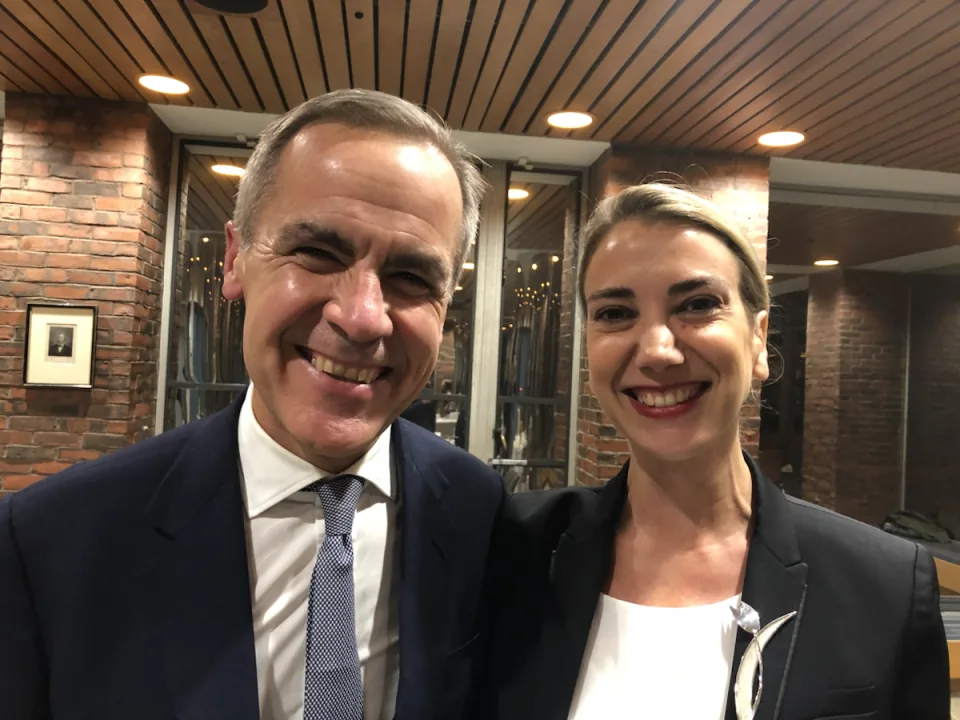
Asli Gulcur with Mark Carney at Harvard Kennedy School in 2019
With Mark Carney, then Governor of the Bank of England, at Harvard Kennedy School in 2019—as the Bank navigated the financial-stability implications of Brexit.

02Salesforce2020–2025

Co-led the business-value framework for Salesforce’s agentic AI launch (Agentforce).

As a Senior Director in Business Value Services, I reached out to the CEO of Salesforce AI before the company’s AI strategy was public. I then joined the cross-functional go-to-market team during incubation to translate a new technical category into business language the global field organization could use. I became the main point of contact on business value for the CEO of Salesforce AI.

  • 5,000+field personnel aligned across Solution Engineering, Sales, and Customer Success
  • 10person AI business-value team co-led during a rapid innovation cycle
  • $27M+my largest Fortune 500 SaaS deal; business case and deal strategy owned through close (total contract value)
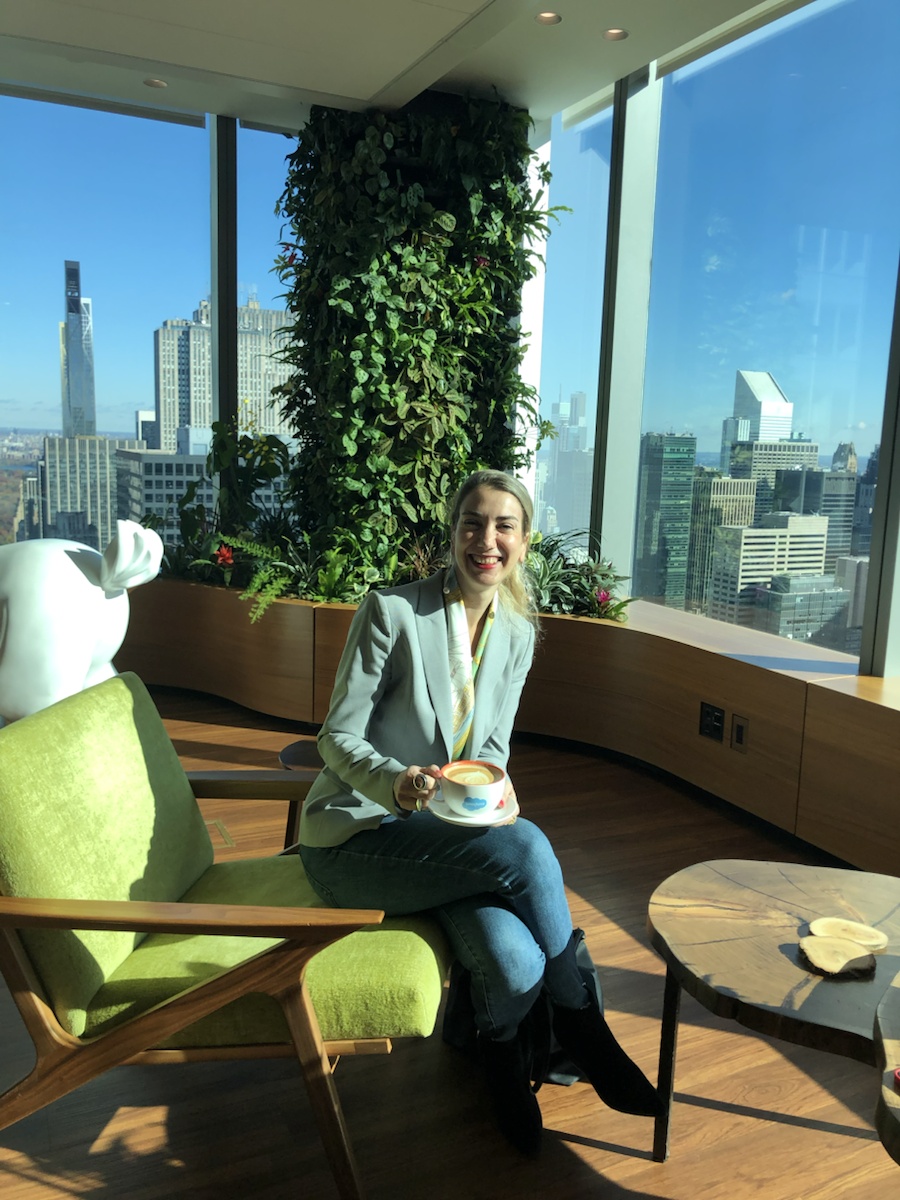
Asli Gulcur seated in a bright Salesforce office overlooking New York City

03Tüpraş / Koç Holding2017–2019

Asli Gulcur overlooking the Tüpraş refinery, storage terminals, and surrounding industrial landscape
Tüpraş · On site, 2017–2019

Advanced strategic planning through turbulence and transformation.

At Tüpraş, Turkey's largest industrial company and Europe's seventh-largest refiner, I was appointed to a newly created executive role reporting to the CFO. I built a department spanning Strategic Planning, Investor Relations, and Insurance, and led it through macroeconomic instability, political uncertainty, and geopolitical disruption across energy markets.

At Koç Group, I experienced digital transformation from the executive side—seeing firsthand what it takes to translate new technology into organizational capability and adoption.

  • Firstfemale executive in Tüpraş history
  • 400+investor meetings across London, New York, and Istanbul
  • $5Basset insurance coverage secured with 50+ global reinsurers

Career depth and governance

The pattern predates AI.

Before the current AI work, I had already built new functions, led cross-border due diligences, advised through structural shifts, and worked across markets where trust was part of the operating system.

2010–17Aygaz · Koç HoldingBuilt Corporate Development from the ground up, reporting to the CFO and taking proposals to investment committees and the board; led 30-person teams on international due diligence and M&A targets up to $1B.
2007–09Taliesin CapitalSecond hire at a seed-stage merger-arbitrage fund: a team of three through the 2008 financial crisis.
2003–07BP · Helios FellowOne of ten MBA graduates selected worldwide for BP's inaugural rotational leadership program in London.
Early careerInternet TransformationFrom Japan to Brazil, helped established companies navigate the Internet shift through seminars and rapid prototypes in programs sponsored by Oracle, SAP, and HP.
Global career New York · Boston · London · Istanbul — strategic initiatives across the US, UK, Turkey, France, Brazil, UAE, and India

Studio practice

Stay with complexity until structure appears.

200+ original works. Painting is where I practice sustained attention, judgment, and synthesis, the same discipline I bring to complex transformations.

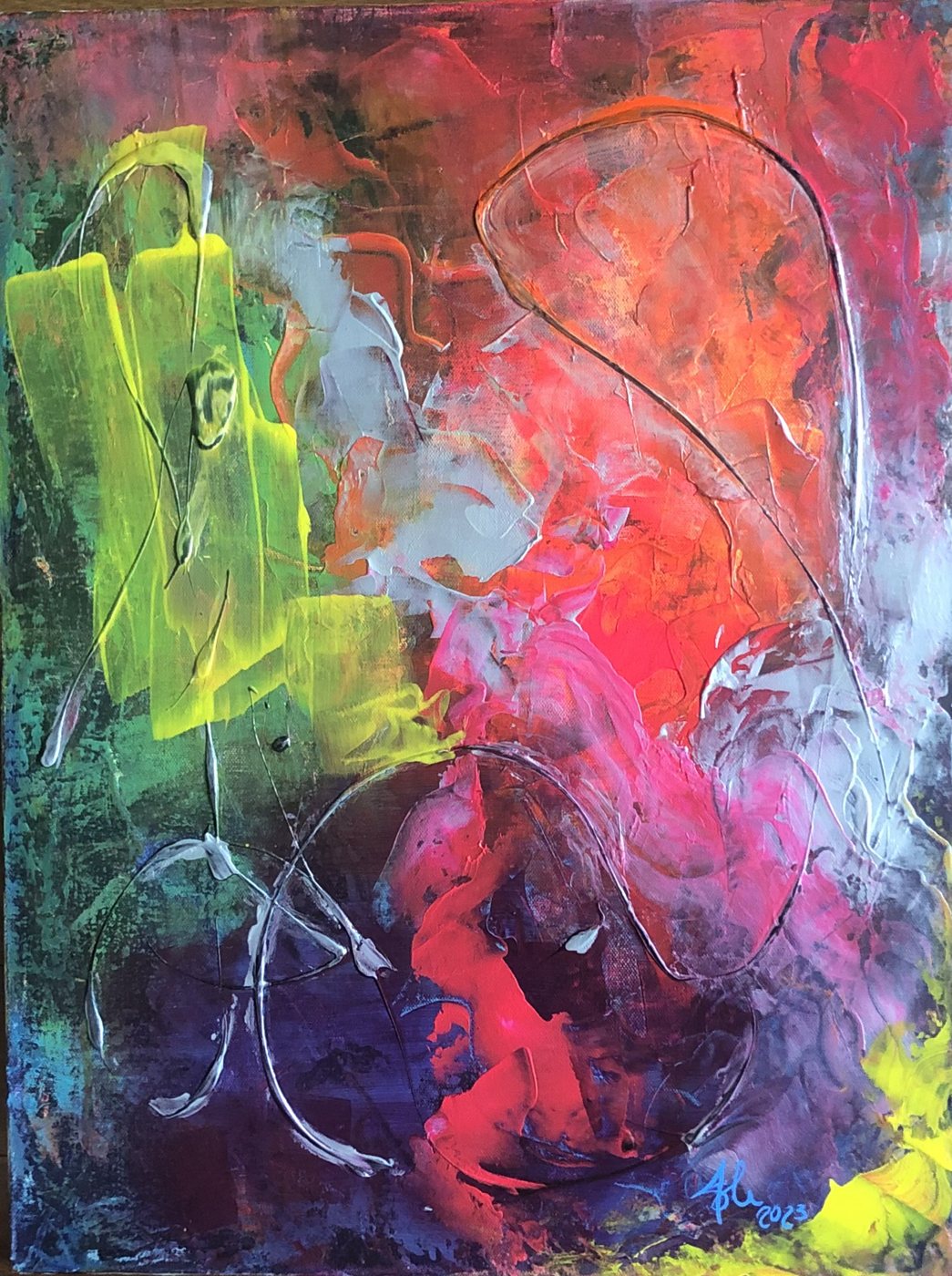
Abstract painting by Asli Gulcur with vivid coral, green, blue, and violet ribbons
Original painting · Asli Gulcur
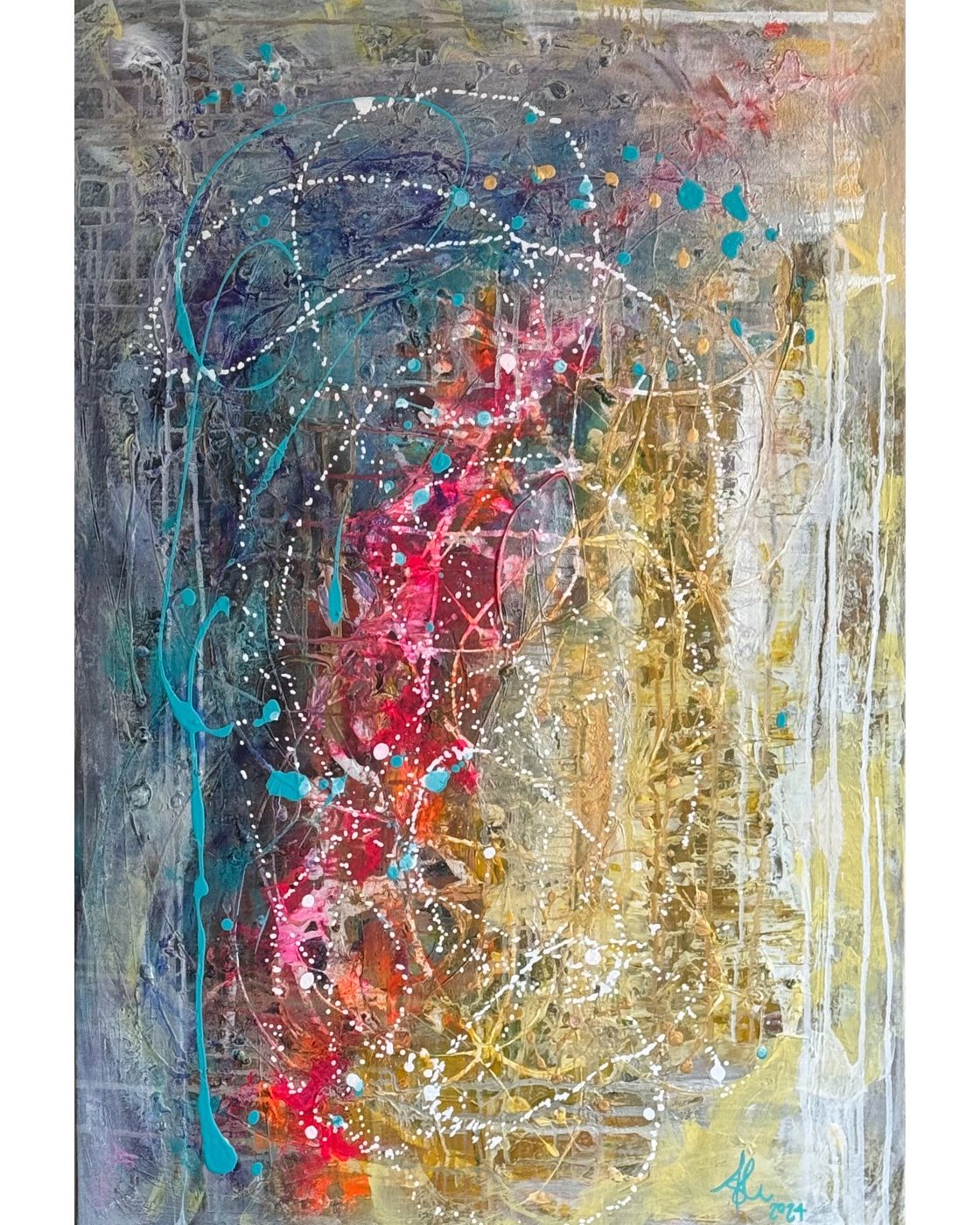
Abstract painting by Asli Gulcur with layered grey, gold, teal, and crimson textures
Original painting · Asli Gulcur